
Check legal thresholds, timelines and fees against the current law and the latest Commission guidelines before you teach.
Unit competency
Guide eligible citizens to register as voters, transfer or update their registration, and inspect and verify the Register of Voters.
Performance criteria
- Qualifications, disqualifications and required documents are stated accurately.
- The registration procedure is demonstrated step by step.
- Transfer, change of particulars, inspection and verification are explained correctly.
- The role of technology in registration is explained.
Learning outcomes
| Knowledge | Skills | Attitudes |
|---|---|---|
| Explain the meaning and importance of voter registration. State the qualifications, disqualifications and required documents. Describe the compilation, audit and certification of the register. | Demonstrate the registration procedure. Conduct a mock inspection and verification of the register. Guide a voter through transfer or change of particulars. | Appreciate the significance of registering as a voter. Value an accurate and inclusive register. |
Key inquiry question
- Why is an accurate Register of Voters the foundation of a credible election?
Session 1: Registration as a Voter
Time: 45 minutes
Suggested learning experiences
Guide participants to:
- Brainstorm the meaning of voter registration and the forms it takes (continuous and mass registration).
- Develop short messages or posters on the importance of registering as a voter.
- Discuss the qualifications, disqualifications and documents for registration.
- Role play the registration process.
- Discuss ways of identifying registration centres, including official IEBC notices and digital platforms.
Suggested resources
The Constitution of Kenya, 2010; Elections Act, 2011; Elections (Registration of Voters) Regulations, 2012; Voter Registration Manual; sample registration forms; digital devices.
Key notes
Voter registration is the process by which eligible citizens are recorded in the Register of Voters, including their biometric data, so that they may vote in an election or referendum.
Qualifications for registration (Article 83)
A person qualifies for registration as a voter if the person is:
- an adult citizen (18 years of age or older);
- not declared to be of unsound mind; and
- not convicted of an election offence during the preceding five years.
A person is also not registered while they are an undischarged bankrupt, in accordance with the Elections Act.
Documents required
- An original Kenyan national identity card; or
- a valid Kenyan passport.
The same document used to register must be presented when voting.
Registration procedure
- The applicant appears in person before a registration officer.
- The applicant presents an original national identity card or valid Kenyan passport.
- The applicant completes and signs the prescribed application form.
- The applicant's biometric data (fingerprints and facial image) are captured.
- The applicant receives an acknowledgement slip.
Importance of voter registration
- It enables citizens to exercise their right to vote.
- It enables citizens to contest elective office and to support candidates.
- It enables the Commission to plan polling stations, materials and staff.
- It is the basis for an accurate and credible Register of Voters.
- It enables targeted voter education, including for special interest groups.
Places of registration
- Gazetted registration centres during mass voter registration.
- IEBC constituency offices during continuous registration.
- Huduma Centres and other designated service centres, where the Commission so provides.
- Designated Kenyan embassies, high commissions and consulates for citizens in the diaspora.
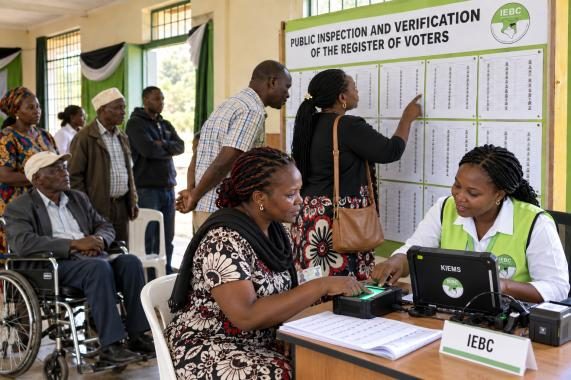
Figure 3.3: Public inspection and verification of the Register of Voters
Session 2: Transfer, Inspection, Verification and Certification of the Register
Time: 45 minutes
Suggested learning experiences
Guide participants to:
- Brainstorm the process of transferring registration.
- Discuss the process of changing particulars.
- Simulate the inspection and verification of the Register of Voters, including by SMS and the online portal.
- Think, pair and share on the audit, certification and publication of the register.
- Discuss the role of technology in elections and present their conclusions.
Key notes
Transfer of registration
- A registered voter who wishes to vote in a different electoral area applies in person to the registration officer of the area to which they wish to transfer.
- The voter presents the identification document used at registration.
- The registration officer confirms the voter's registration, the voter completes the prescribed transfer form, and the voter's biometric data are captured.
- Applications for transfer must be made within the time allowed by the regulations before an election. Voters should transfer well before the register is closed.
Inspection, verification and updating of the register
Inspection allows registered voters and other interested persons to check registration details. Verification allows each voter to confirm that their biometric and alphanumeric data are correct. Updating corrects errors and gives effect to valid claims and objections. The process involves:
- publishing a notice of inspection;
- displaying the preliminary register at registration centres and making it available through SMS and the online portal;
- voters appearing in person with the document used at registration to verify their details;
- registration officers receiving and determining claims and objections, with a right of appeal for a dissatisfied person;
- correcting clerical errors, resolving multiple registrations and removing the names of deceased voters on the basis of official records; and
- publishing a list of changes made at conspicuous places within the constituency.
Audit, compilation, certification and publication
- Audit: The Commission engages a professional reputable firm to audit the register at least six months before a general election, to verify its accuracy, completeness and currency.
- Compilation: The Commission compiles the Register of Voters from data captured in the field and stored in a central database. There is one Register of Voters, comprising polling station, ward, constituency and county registers and a register of voters residing outside Kenya.
- Certification and publication: The Commission certifies the register for use in an election and gives public notice, in the Gazette, that it is complete and available.
Role of technology in voter registration
- Speeds up registration and improves accuracy.
- Captures alphanumeric and biometric data for identification and authentication.
- Detects multiple registrations through unique biometric identifiers.
- Reduces impersonation.
- Enables voters to verify their details by SMS and online.
Importance of inspecting and auditing the register
- Voters confirm that their details are correctly captured.
- Errors are identified and corrected before the election.
- The public can make claims and objections.
- Stakeholder confidence in the register and the election increases.
Assessment
| Criterion | 4 – Exceeds | 3 – Meets | 2 – Approaches | 1 – Below |
|---|---|---|---|---|
| Eligibility and documents | States all accurately and handles difficult cases (e.g. lost ID) | States qualifications, disqualifications and documents correctly | Minor errors | Major errors |
| Registration procedure | Demonstrates fluently and coaches peers | Demonstrates all steps correctly | Omits steps | Cannot demonstrate |
| Transfer and inspection | Explains all processes and digital options | Explains transfer, inspection and verification correctly | Partly correct | Incorrect |
Evidence of competence: observed role play of registration and a mock inspection exercise.