
Check legal thresholds, timelines and fees against the current law and the latest Commission guidelines before you teach.
Unit competency
Verify election-related claims, images, videos and documents using a systematic method and official sources, and record the result in a simple fact-check report.
Performance criteria
- The SIFT method is applied correctly to a claim.
- Official IEBC channels are used to confirm electoral information.
- A reverse image search is performed correctly.
- A short, accurate fact-check report is produced.
Learning outcomes
| Knowledge | Skills | Attitudes |
|---|---|---|
| Describe the SIFT method and lateral reading. Identify official sources of electoral information. Identify recognised fact-checking organisations. | Verify a claim, an image and a document. Perform a reverse image search. Write a fact-check report. | Demonstrate healthy scepticism without cynicism. Value evidence over rumour. |
Session 1: The SIFT Method and Official Sources
Time: 45 minutes
Suggested learning experiences
Guide participants to:
- Apply the SIFT method, in pairs, to three sample claims.
- Locate the IEBC's verified website and social media accounts and compare them with an imposter account.
- Use the official SMS or online service to confirm a voter's registration details, with the voter's consent.
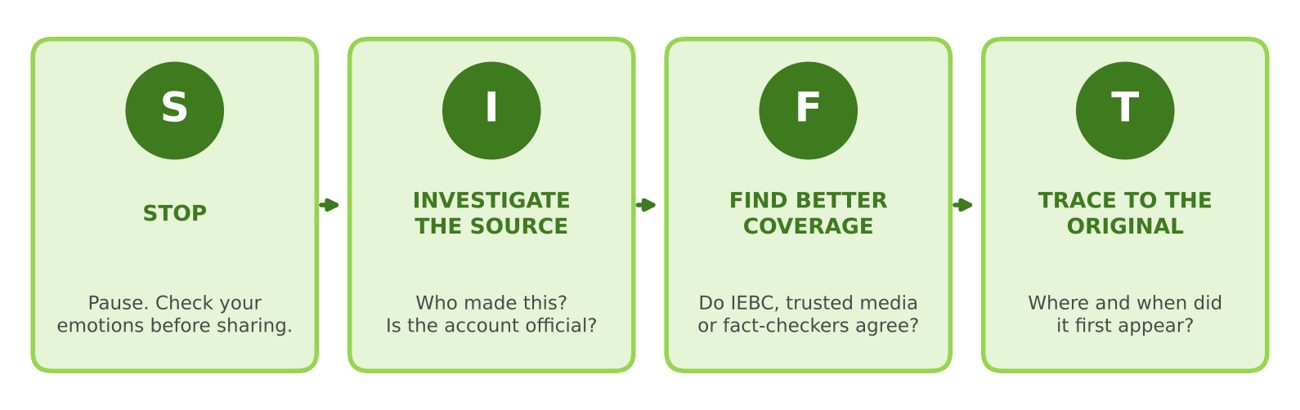
Figure 4.3: The SIFT method of verification
Key notes
The SIFT method
| Step | What to do | Questions to ask |
|---|---|---|
| Stop | Pause before reacting or sharing. | How does this make me feel? Am I about to share it because I am angry or afraid? |
| Investigate the source | Find out who created or shared the content. | Is this an official account? Is the account new? What is its track record? |
| Find better coverage | Look for the same claim in trusted sources. | Has the IEBC, a reputable media house or a fact-checker reported this? |
| Trace to the original | Find the original context of the claim, image or quote. | When and where was this first published? Has it been edited or taken out of context? |
Lateral reading means leaving the suspicious page and opening new tabs to check what other reliable sources say about it, rather than reading the suspicious page more closely.
Official sources of electoral information
- The Commission's official website and public results portal.
- The Commission's verified social media accounts (@IEBCKenya).
- The Commission's official SMS service for checking registration details.
- Gazette notices and official press statements.
- IEBC constituency and county offices, and accredited voter educators.
Point to note
Always check the verification mark and account history. Imposter accounts often use the Commission's logo with small changes in the account name.
Recognised fact-checking organisations
Independent fact-checkers that work in Kenya include PesaCheck, Africa Check and AFP Fact Check. Major media houses also operate fact-checking desks. Voter educators should refer citizens to these sources, not to partisan "fact-check" pages.
Session 2: Verifying Images, Videos and Documents
Time: 45 minutes
Suggested learning experiences
Guide participants to:
- Perform a reverse image search on a sample photo using a free tool (for example, Google Lens or TinEye) and determine its original date and place.
- Examine a forged and a genuine specimen results form side by side and list the differences.
- Write a short fact-check report using the template below.
Key notes
Verifying images and videos
- Use reverse image search to find earlier versions of an image.
- Check weather, signs, vehicle number plates, language and landmarks against the claimed place and date.
- For videos, take screenshots of key frames and search them; look for the longest, earliest version.
- Look for the warning signs of AI-generated or manipulated content described in Unit 4.2.
Verifying documents
- Compare the document with official specimens: logos, fonts, stamps, serial numbers and signatures.
- Check whether the document appears on the Commission's website or public portal.
- Check that the dates, names and figures are internally consistent.
- Results forms should be checked against the scanned forms published on the Commission's public portal.
Simple fact-check report template
| Item | Entry |
|---|---|
| Claim | What exactly is being claimed? |
| Where seen | Platform, group or person, and date |
| Verification steps | Sources checked and tools used |
| Evidence | What the official or reliable sources say |
| Verdict | True / False / Misleading / Unverified |
| Correct information | The accurate information, with its official source |
Assessment
| Criterion | 4 – Exceeds | 3 – Meets | 2 – Approaches | 1 – Below |
|---|---|---|---|---|
| Application of SIFT | Applies all steps fluently to complex content | Applies all steps correctly | Skips steps | Cannot apply |
| Image and document verification | Determines the origin and identifies all inconsistencies | Performs reverse search and identifies key inconsistencies | Partly successful | Unsuccessful |
| Fact-check report | Clear, sourced, neutral and ready to publish | Accurate and sourced | Incomplete | Inaccurate |
Evidence of competence: two completed fact-check reports in the participant's portfolio.