
Check legal thresholds, timelines and fees against the current law and the latest Commission guidelines before you teach.
Unit competency
Explain the meaning, dimensions and importance of electoral security; identify election offences; and respond appropriately to a suspected offence or security incident.
Performance criteria
- Electoral security is defined, and its seven dimensions are explained with examples.
- Security concerns are mapped correctly to each phase of the electoral cycle.
- Common election offences and their possible consequences are identified.
- The immediate-response steps for a suspected offence are applied correctly in a scenario.
- The roles of agencies in interagency collaboration are distinguished, while the independence of the IEBC is respected.
Learning outcomes
| Knowledge | Skills | Attitudes |
|---|---|---|
| Explain the meaning and dimensions of electoral security. Identify election offences and penalties. Describe the roles of agencies in electoral security. | Map security risks across the electoral cycle. Apply the immediate-response steps to a scenario. Develop a personal action plan to promote electoral security. | Appreciate security as a shared, whole-cycle responsibility. Uphold neutrality, legality and respect for human rights. |
Key inquiry question
- What does it take for every citizen to feel safe enough to vote?
Core competencies, values and PCIs
| Core competencies | Values | Pertinent and contemporary issues |
|---|---|---|
| Critical thinking and problem solving; citizenship; communication | Peace; rule of law; human rights; accountability | Peace and conflict resolution; gender-based violence; cybersecurity; psychosocial wellbeing |
Session 1: Meaning, Dimensions and Importance of Electoral Security
Time: 45 minutes
Session outcomes
By the end of the session, the participant should be able to:
a) explain the meaning of security in the electoral process;
b) describe the dimensions of electoral security;
c) identify potential security threats in each phase of the electoral cycle;
d) appreciate the importance of security in free, fair, peaceful and credible elections.
Suggested learning experiences
Guide participants to:
- Think, pair and share the meaning of security in the electoral process.
- Map, in groups, the security threats in their own county across the phases of the electoral cycle.
- Watch video clips on the roles of the IEBC, the police, the national administration, political parties, civil society and community leaders in electoral security.
Suggested resources
The Constitution of Kenya, 2010; Elections Act, 2011; Election Offences Act, 2016; National Police Service Act, 2011; Electoral Code of Conduct; IEBC Election Operations Plan; documentaries and case law.
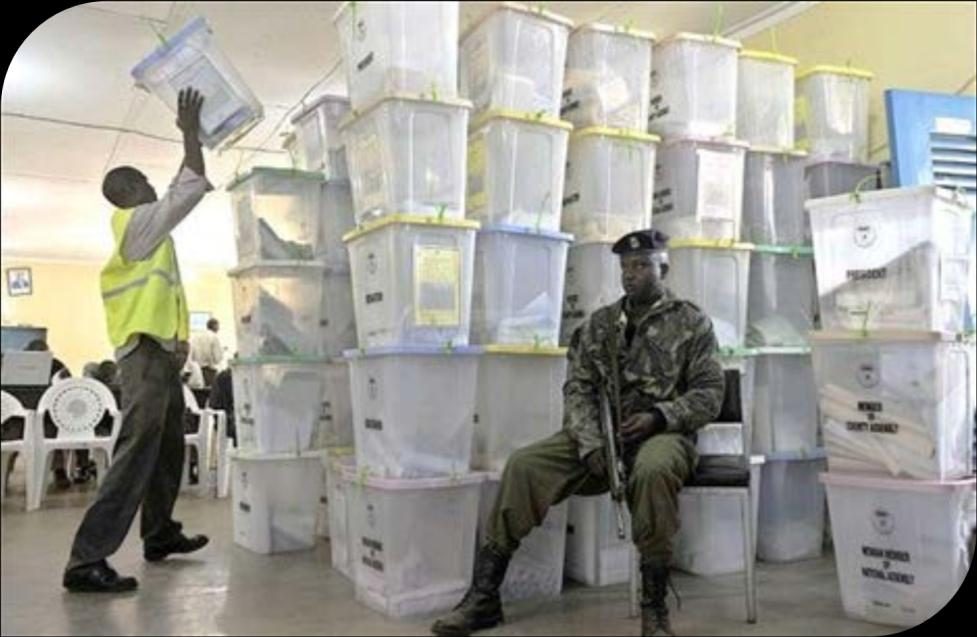
Figure 5.1: Security officers at a tallying centre
Key notes
Security in the electoral process means the protection of people, rights, election operations, materials, premises, information, technology and results from violence, intimidation, coercion, interference, fraud, disruption and other threats throughout the electoral cycle.
Constitutional standard
Article 81(e) requires elections to be free and fair: by secret ballot; free from violence, intimidation, improper influence or corruption; conducted by an independent body; transparent; and administered in an impartial, neutral, efficient, accurate and accountable manner.
Dimensions of electoral security
| Dimension | Focus |
|---|---|
| Physical security | Safety of people, premises, transport, equipment and election materials. |
| Political security | Freedom to participate, campaign, associate and make political choices without retaliation. |
| Operational security | Continuity, readiness, logistics, access control and contingency arrangements. |
| Information security | Accuracy, confidentiality, availability and responsible sharing of election information. |
| Cybersecurity | Protection of election systems from unauthorised access, manipulation, disruption and data loss. |
| Legal security | Consistent enforcement of the law and timely, fair resolution of disputes. |
| Psychosocial security | Protection from threats, fear, trauma, harassment and hostile working conditions. |
Electoral security across the cycle
| Phase | Illustrative security concerns |
|---|---|
| Pre-election | Safety of registration centres; nomination disputes; hate speech; campaign violence; misinformation; integrity of recruitment; secure storage of materials. |
| Election day | Access to polling stations; crowd management; secrecy of the vote; protection of officials and materials; rapid incident response. |
| Counting and tallying | Chain of custody; controlled access; rights of agents and observers; accurate forms; secure communications; protection of tallying centres. |
| Post-election | Acceptance of results; lawful protest; protection against retaliation; preservation of evidence; peaceful petition processes. |
Importance of electoral security
- Protection of life and property: it reduces injury, death, destruction, displacement and disruption of livelihoods.
- Exercise of political rights: citizens can register, campaign, assemble, contest and vote without fear.
- Secrecy and freedom of choice: voters are protected from surveillance, intimidation and coercion.
- Participation and inclusion: it encourages participation, particularly of women, youth, persons with disabilities, older persons and marginalised communities.
- Integrity of operations: it protects materials, statutory forms, technology and the chain of custody.
- Confidence and legitimacy: it strengthens trust in the Commission, the results and the peaceful transfer or retention of power.
- Lawful dispute resolution: it encourages aggrieved parties to use complaints mechanisms and courts rather than violence.
- National stability and cohesion: it supports economic activity, essential services and constitutional governance.
Session 2: Election Offences, Immediate Response and Interagency Collaboration
Time: 45 minutes
Session outcomes
By the end of the session, the participant should be able to:
a) describe common election offences and their possible consequences;
b) apply the immediate-response steps to a suspected offence;
c) explain the roles of agencies in interagency collaboration for electoral security;
d) develop a personal action plan to promote electoral security.
Suggested learning experiences
Guide participants to:
- Share experiences of common election offences in their communities.
- Apply the immediate-response steps to a scenario of voter intimidation outside a polling station.
- Practise resolving an electoral disagreement through dialogue, negotiation and mediation, and by referral to the established legal processes.
- Develop a personal action plan on promoting electoral security, responsible social media use, tolerance, peaceful participation and the lawful resolution of disputes.
Key notes
Election offences and possible consequences
An election offence is an unlawful act or omission that undermines free choice, fairness, order, transparency or the integrity of an election. Liability depends on the facts, the evidence and the precise legal provision. Electoral misconduct may also be an offence under other laws.
| Offence or misconduct | Illustrative conduct | Possible consequence |
|---|---|---|
| Bribery and treating | Offering, giving, soliciting or receiving money, gifts, jobs, food or other benefits to influence electoral conduct. | Fine, imprisonment or both; some offences also lead to disqualification. |
| Undue influence | Threats, force, coercion, intimidation, spiritual pressure or other improper interference with a voter's free choice. | Fine, imprisonment or both. |
| Violence and use of force | Assault, threats, injury, destruction or disruption directed at voters, candidates, officials, meetings or election premises. | Prosecution, fine, imprisonment or both; possible electoral consequences. |
| Impersonation and illegal voting | Voting in another person's name, voting when not entitled, or voting more than once. | Prosecution and statutory penalties. |
| Interference with materials or results | Stealing, destroying, concealing, altering or unlawfully possessing ballot papers, registers, forms or records. | Criminal penalties; may affect the validity of the election. |
| Breach of secrecy | Discovering, disclosing or interfering with how a voter voted, except as permitted by law. | Fine, imprisonment or both. |
| Official misconduct | Falsifying records or results, failing to perform a statutory duty, or improperly influencing the process. | Criminal, disciplinary and administrative consequences. |
| Misconduct at campaigns or polling stations | Disrupting meetings, campaigning in prohibited places, displaying unauthorised material, carrying weapons or refusing lawful directions. | Removal, lawful arrest, prosecution and statutory sanctions. |
| Hate speech or incitement | Communication intended or likely to stir up hatred, discrimination or violence. | Investigation and prosecution under electoral, cohesion and criminal laws. |
| Misuse of public resources | Using public personnel, vehicles, funds, premises or authority to advantage a candidate or party. | Administrative, criminal, integrity and electoral consequences. |
| Election-related sexual and gender-based violence | Sexual harassment, assault or threats used to intimidate or punish voters, candidates or officials. | Prosecution under the Sexual Offences Act and Penal Code, in addition to electoral consequences. |
Penalty framework
Depending on the offence, penalties under the election laws may include:
- fines, which for some serious offences may reach two million shillings;
- imprisonment, which for some serious offences may extend to six years;
- both a fine and imprisonment;
- disqualification from registration as a voter or from candidature for a prescribed period;
- sanctions under the Electoral Code of Conduct, including warnings, fines and other lawful orders;
- disciplinary action against election officials or public officers; and
- nullification of an election where proven non-compliance or misconduct meets the legal test.
Point to note
Penalties differ by offence and may be amended. Before quoting a penalty, consult the current law and identify the exact section. Voter educators and election officials document and report suspected offences; they do not determine guilt.
Immediate response to a suspected offence
- Prioritise life, safety and medical assistance.
- Notify the responsible election official and the police through established reporting channels.
- Record the date, time, place, persons involved and a factual description of the incident.
- Preserve documents, electronic records, photographs and video lawfully, and maintain the chain of custody.
- Avoid confrontation, speculation, partisan statements or public disclosure of sensitive information.
- Escalate serious incidents promptly and cooperate with lawful investigations.
Interagency collaboration for electoral security
Electoral security requires coordinated action, because no single institution has all the information, authority, personnel and expertise needed to prevent and manage electoral risks. Collaboration must preserve the constitutional independence of the IEBC and the distinct legal mandate of every agency.
| Institution or stakeholder | Principal contribution |
|---|---|
| IEBC | Administers elections; assesses risk; plans sites, materials and operations; trains officials; reports incidents; coordinates security requirements without surrendering its independence. |
| National Police Service | Protects people, premises and materials; maintains public order; responds to incidents; investigates offences. |
| Directorate of Criminal Investigations | Conducts specialised investigations and prepares case files. |
| Office of the Director of Public Prosecutions | Reviews investigation files and prosecutes election offences independently. |
| National Cohesion and Integration Commission | Monitors hate speech and incitement and promotes cohesion. |
| ORPP and PPDT | Support party compliance and resolve party disputes. |
| Judiciary | Independently determines election petitions and other disputes. |
| National and county administration | Provide local risk information and support coordination and emergency planning. |
| Political parties and candidates | Observe the law and the Code of Conduct; control supporters; appoint liaison persons; report threats; pursue lawful remedies. |
| Civil society, faith leaders, media and communities | Provide civic education, observation, peace messaging, early warning, mediation and verified information. |
| Organisations representing women, youth, persons with disabilities, minorities and marginalised communities | Advise on the specific risks facing their constituencies and support survivors and affected persons. |
| Emergency and health services | Provide rescue, first aid, psychosocial support and referral. |
Principles for lawful collaboration
| Principle | Application |
|---|---|
| Independence | Collaboration must not compromise the authority of the IEBC or the independence of investigative, prosecutorial and judicial bodies. |
| Neutrality | Protection and enforcement are applied without favouring any candidate, party or community. |
| Legality | Every action has a lawful basis and respects due process. |
| Necessity and proportionality | Security measures and any use of force are necessary, reasonable and proportionate. |
| Human rights | Dignity, equality, privacy, expression, assembly and access to the vote are protected. |
| Accountability | Decisions, incidents, deployments and evidence transfers are recorded. |
| Need-to-know information sharing | Verified information is shared through authorised channels while protecting personal and operational data. |
Assessment
| Criterion | 4 – Exceeds | 3 – Meets | 2 – Approaches | 1 – Below |
|---|---|---|---|---|
| Meaning and dimensions | Explains all dimensions with local examples across the cycle | Explains meaning and dimensions accurately | Partly correct | Incorrect |
| Offences and response | Applies all response steps flawlessly and identifies the offence | Identifies the offence and applies the response steps correctly | Omits key steps | Responds unsafely |
| Interagency roles | Distinguishes all roles and safeguards IEBC independence | Identifies the main roles correctly | Confuses some roles | Cannot identify |
Evidence of competence: a county security risk map and a personal action plan.