
Check legal thresholds, timelines and fees against the current law and the latest Commission guidelines before you teach.
Unit competency
Explain the constitutional basis for the representation of marginalised groups, identify the groups and their rights and needs in the electoral process, and plan inclusive voter education for them.
Performance criteria
- Article 100 and the related provisions (Articles 21, 27, 54, 55, 56, 81, 177 and 260) are explained accurately.
- The five Article 100 groups, and other special interest groups, are identified correctly.
- The current mechanisms for representing each group are described.
- An inclusive voter education activity is planned for a specific group.
Learning outcomes
| Knowledge | Skills | Attitudes |
|---|---|---|
| Explain Article 100 and the related constitutional provisions. Define "marginalised group" and "marginalised community". Describe the rights, needs and representation mechanisms for each group. | Map the marginalised groups in a ward. Plan an inclusive voter education activity. | Respect diversity and the equal worth of every voter. Value affirmative action as a means to equality. |
Key inquiry questions
- Why does the Constitution single out certain groups for representation?
- Who in our community is missing from registration lists, campaign platforms and elected bodies?
Core competencies, values and PCIs
| Core competencies | Values | Pertinent and contemporary issues |
|---|---|---|
| Citizenship; critical thinking; communication | Equality; inclusiveness; social justice; protection of the marginalised | Gender equality; disability inclusion; minority rights; social cohesion |
Session 1: The Constitutional Framework for Marginalised Groups
Time: 30 minutes
Session outcomes
By the end of the session, the participant should be able to:
a) explain the requirements of Article 100;
b) define "marginalised group" and "marginalised community" under Article 260;
c) describe the mechanisms through which each group is currently represented;
d) appreciate the role of affirmative action in achieving equality.
Suggested learning experiences
Guide participants to:
- Read Articles 100, 56 and 260 in groups and explain them in their own words.
- Compare, using official data, the number of women, youth, persons with disabilities and members of minority communities in their county assembly with their share of the population.
- Debate the motion: "Nominated seats are enough to secure the representation of marginalised groups."
Suggested resources
The Constitution of Kenya, 2010 (Articles 10, 21, 27, 54–57, 81, 97, 98, 100, 177 and 260); Elections Act, 2011; Political Parties Act, 2011; IEBC Gender and Social Inclusion Policy; resource persons from organisations representing each group.
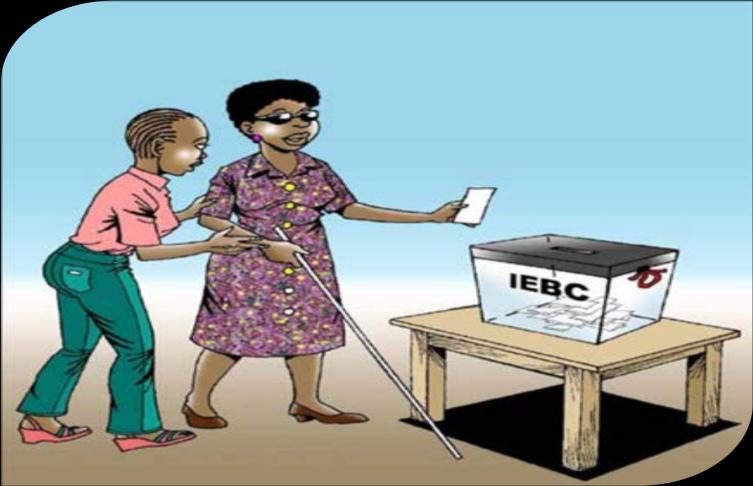
Figure 6.1: Members of marginalised groups participating in electoral activities
Key notes
Article 100
Parliament shall enact legislation to promote the representation in Parliament of:
- women;
- persons with disabilities;
- youth;
- ethnic and other minorities; and
- marginalised communities.
Point to note
Several Bills have been introduced to give effect to Article 100, but at the date of publication comprehensive legislation had not been enacted. Representation is currently secured mainly through the reserved and nominated seats provided in the Constitution and the Elections Act. Trainers should confirm the current legislative position.
Related constitutional provisions
| Provision | What it provides |
|---|---|
| Article 21(3) | All State organs must address the needs of vulnerable groups, including women, older members of society, persons with disabilities, children, youth, members of minority or marginalised communities, and members of particular ethnic, religious or cultural communities. |
| Article 27(6)–(8) | The State must take affirmative action to redress past disadvantage, and must ensure that not more than two-thirds of elective or appointive bodies are of the same gender. |
| Article 54 | Rights of persons with disabilities, including access, dignity and the progressive realisation of at least five per cent representation in elective and appointive bodies. |
| Article 55 | The State must ensure that youth have opportunities to associate, be represented and participate in political, social and economic life. |
| Article 56 | The State must put in place affirmative action programmes to ensure that minorities and marginalised groups participate and are represented in governance and other spheres of life. |
| Article 81(b) and (c) | The electoral system must comply with the two-thirds gender principle and fair representation of persons with disabilities. |
| Article 91(1)(e) | Political parties must respect and promote the rights of minorities and marginalised groups. |
| Article 260 | Defines "marginalised group" and "marginalised community" (see below). |
Definitions (Article 260)
- A marginalised group is a group of people who, because of laws or practices before, on or after the effective date of the Constitution, were or are disadvantaged by discrimination on one or more of the grounds in Article 27(4), such as sex, age, disability, ethnic or social origin, religion or language.
- A marginalised community is:
- a community that, because of its relatively small population or for any other reason, has been unable to participate fully in the integrated social and economic life of Kenya;
- a traditional community that has remained outside the integrated social and economic life of Kenya to preserve its unique culture and identity;
- an indigenous community that has retained a traditional lifestyle and livelihood based on a hunter or gatherer economy; or
- pastoral persons and communities, whether nomadic or settled, that have experienced only marginal participation because of geographic isolation.
Current representation mechanisms
| Group | Mechanisms |
|---|---|
| Women | 47 County Woman Members of the National Assembly; 16 nominated women senators; gender top-up seats in county assemblies; alternating gender on party lists. |
| Persons with disabilities | Nominated seats in the National Assembly (among the 12 special-interest seats), the Senate (one man and one woman) and county assemblies. |
| Youth | Nominated seats in the National Assembly (among the 12 special-interest seats), the Senate (one man and one woman) and county assemblies. |
| Ethnic and other minorities and marginalised communities | Members for marginalised groups in county assemblies; the requirement that party lists reflect Kenya's ethnic diversity; nominated seats in the National Assembly. |
Session 2: Rights, Needs and Inclusive Voter Education
Time: 30 minutes
Session outcomes
By the end of the session, the participant should be able to:
a) identify the marginalised groups and other special interest groups in their community;
b) state their rights and needs in the electoral process;
c) plan an inclusive voter education activity.
Suggested learning experiences
Guide participants to:
- Map the marginalised groups in their ward, including where they live, how they receive information and who represents them.
- Plan a 30-minute voter education activity for one group, showing how venue, language, format and timing will be adapted.
Key notes
Other special interest groups
In addition to the five groups in Article 100, voter educators should give attention to older persons (Article 57), internally displaced persons, persons in lawful custody and citizens in the diaspora, who face particular barriers to participation.
Rights of marginalised groups in the electoral process
- To register as voters and to vote in elections, by-elections and referendums.
- To contest elective office and to be nominated to reserved and special seats.
- To vote by secret ballot for a candidate of their choice.
- To receive electoral information in accessible formats and in languages they understand.
- To accessible registration centres and polling stations.
- To priority in queues and assistance in voting where needed.
- To be protected from discrimination, abuse, intimidation and exploitation.
Needs of marginalised groups
- Access to identity documents and voter registration.
- Accurate information in accessible formats and local languages.
- Polling stations that are accessible, safe and within reasonable distance.
- Priority and assistance during voting, and aids such as tactile ballot guides and sign-language interpretation.
- Customised voter education delivered through trusted community structures.
- Protection from violence, hate speech and exploitation.
Importance of their participation
- It gives effect to the national values of equality, inclusiveness, social justice and the protection of the marginalised.
- It builds the confidence of voters and increases turnout.
- It ensures that the needs of each group are reflected in laws, budgets and policies.
- It challenges stereotypes and promotes social cohesion.
- It makes elected bodies more representative and legitimate.
Assessment
| Criterion | 4 – Exceeds | 3 – Meets | 2 – Approaches | 1 – Below |
|---|---|---|---|---|
| Constitutional framework | Explains Article 100 and all related provisions and definitions | Explains Article 100, Article 56 and the definitions correctly | Partly correct | Incorrect |
| Representation mechanisms | Analyses the adequacy of each mechanism with data | Describes the mechanisms correctly | Partly correct | Cannot describe |
| Inclusive planning | Plan fully adapted to the specific group | Plan includes appropriate adaptations | Few adaptations | No adaptations |
Evidence of competence: a ward map of marginalised groups and an inclusive voter education activity plan.