
Check legal thresholds, timelines and fees against the current law and the latest Commission guidelines before you teach.
Unit competency
Distinguish misinformation, disinformation, malinformation, hate speech and incitement, and classify election-related content accurately.
Performance criteria
- Each term is defined accurately, with reference to falseness and intent.
- At least six types of false or misleading content are recognised.
- Real election examples are classified correctly and the classification is justified.
Learning outcomes
| Knowledge | Skills | Attitudes |
|---|---|---|
| Define misinformation, disinformation, malinformation, hate speech and incitement. Describe the types of false and misleading content. Identify common election-related false narratives. | Classify sample content correctly. Explain the difference between legitimate criticism and harmful content. | Appreciate the right to freedom of expression and its limits. Take personal responsibility for what one shares. |
Key inquiry questions
- Is every false message a lie?
- Where does free expression end and hate speech begin?
Core competencies, values and PCIs
| Core competencies | Values | Pertinent and contemporary issues |
|---|---|---|
| Critical thinking; digital literacy; citizenship | Integrity; responsibility; respect; peace | Cyber safety; misinformation; hate speech; social cohesion |
Session 1: Misinformation, Disinformation and Malinformation
Time: 30 minutes
Session outcomes
By the end of the session, the participant should be able to:
a) define misinformation, disinformation and malinformation;
b) explain the difference between them using the elements of falseness and intent to harm;
c) classify sample election content correctly;
d) appreciate personal responsibility in sharing information.
Suggested learning experiences
Guide participants to:
- Share examples of election "news" they received on their phones that later turned out to be false.
- Sort ten printed content cards into "misinformation", "disinformation", "malinformation" and "accurate", and justify each choice in plenary.
- Discuss: "If I forward something false without knowing it is false, have I done wrong?"
Suggested resources
Content cards with sample messages; Figure 4.1; projector; mobile phones.
Key notes
Information disorder is the umbrella term for the different ways in which false, misleading or harmful information pollutes the information environment. It is commonly divided into three categories:
| Category | Is it false? | Is there intent to harm? | Election example |
|---|---|---|---|
| Misinformation | Yes | No. It is shared by people who believe it is true. | A voter forwards a message claiming that polling stations close at 3.00 p.m., believing it to be correct. |
| Disinformation | Yes | Yes. It is deliberately created or shared to deceive or cause harm. | A fabricated "IEBC notice" announcing that voters of a particular area should vote on a different day. |
| Malinformation | No, it is based on fact | Yes. Genuine information is used out of context or leaked to cause harm. | A candidate's private medical records are leaked to discredit them, or a voter's personal details are published to intimidate them. |
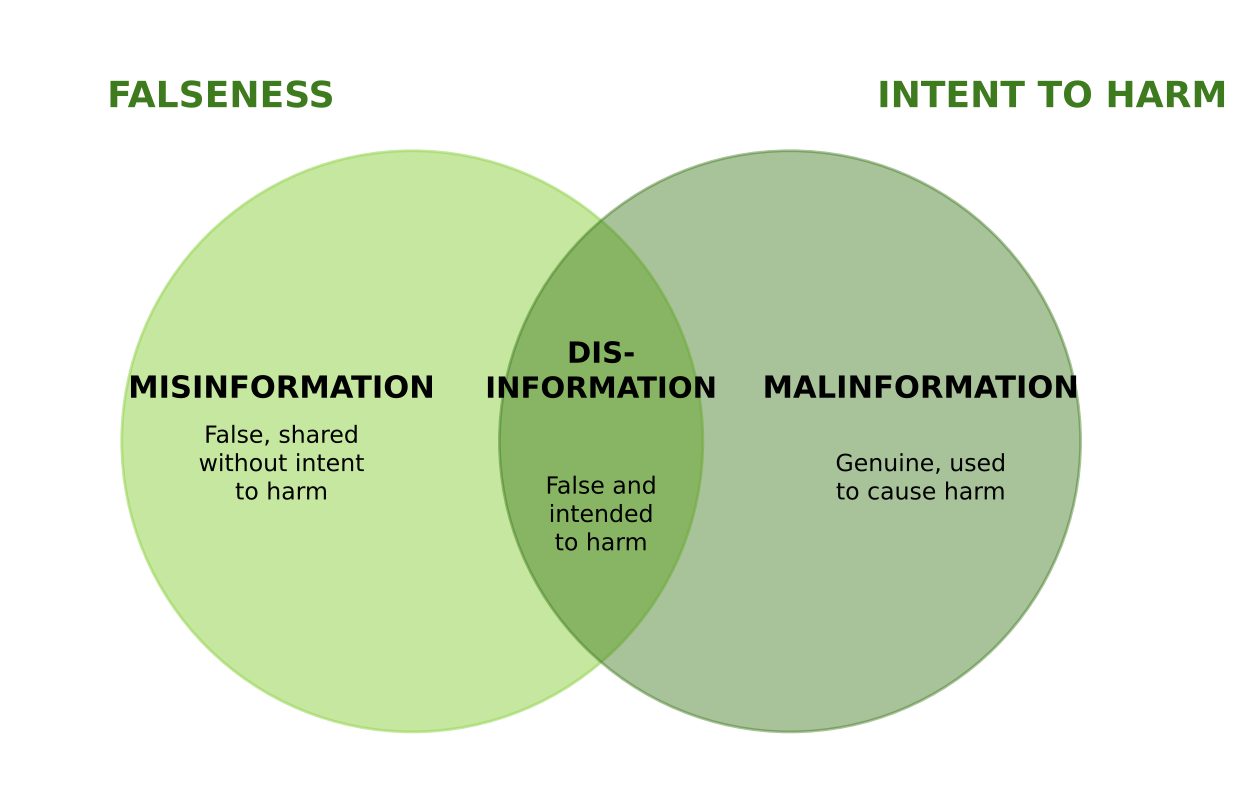
Figure 4.1: The three categories of information disorder
Misinformation often begins as disinformation: a person creates a false message deliberately, and ordinary citizens then share it in good faith. For this reason, voter education addresses both the creators and the unknowing sharers of false content.
Session 2: Types of False Content, Hate Speech and Incitement
Time: 30 minutes
Session outcomes
By the end of the session, the participant should be able to:
a) describe the main types of false and misleading content;
b) define hate speech and incitement in line with Kenyan law;
c) distinguish legitimate criticism from hate speech;
d) identify common false narratives in Kenyan elections.
Suggested learning experiences
Guide participants to:
- Match examples to the seven types of false content in the table below.
- Debate, using prepared statements, whether each statement is protected expression, offensive but lawful, or hate speech.
Key notes
Seven types of false or misleading content
| Type | Description | Election example |
|---|---|---|
| Satire or parody | No intention to harm, but may be mistaken for fact. | A comedy page posts a joke "result" that is shared as real. |
| Misleading content | Information used to frame an issue or person misleadingly. | Selective figures used to claim that the register is "full of dead voters". |
| Imposter content | Genuine sources are impersonated. | A fake social media account using the IEBC logo. |
| Fabricated content | Entirely false content designed to deceive. | A forged Form 34A circulated before official results. |
| False connection | Headlines, visuals or captions that do not match the content. | A sensational headline about "rigging" on an unrelated story. |
| False context | Genuine content shared with false contextual information. | A photo of ballot boxes from another country or another year presented as current evidence of fraud. |
| Manipulated content | Genuine information or images altered to deceive, including AI-generated "deepfakes". | A cloned voice recording of a candidate inciting violence. |
Hate speech and incitement
- Freedom of expression (Article 33) includes the freedom to seek, receive and impart information and ideas, and to criticise leaders, parties and institutions, including the IEBC.
- Article 33(2) excludes from protection propaganda for war, incitement to violence, hate speech, and advocacy of hatred that constitutes ethnic incitement, vilification of others or incitement to cause harm, or that is based on any ground of discrimination in Article 27(4).
- Under section 13 of the National Cohesion and Integration Act, 2008, a person commits the offence of hate speech if they use threatening, abusive or insulting words or behaviour, or publish or distribute such material, intending to stir up ethnic hatred, or where ethnic hatred is likely to be stirred up.
- Incitement is communication that encourages or provokes others to commit violence or discrimination.
| Legitimate criticism (protected) | Hate speech or incitement (not protected) |
|---|---|
| "The candidate failed to deliver on the promised water project." | "People of that community are thieves and must not be allowed to vote here." |
| "I do not trust the results until the forms are published." | "If our candidate loses, burn their homes." |
Common false narratives in Kenyan elections
- False dates, times or venues of registration and voting.
- Claims that one can vote with a photograph of an identity card, or by SMS.
- Claims that the ballot is not secret or that "the machine knows how you voted".
- Forged IEBC notices, press statements and results forms.
- Premature or fabricated results and opinion polls.
- Fake recruitment adverts for election officials, used to defraud job seekers.
- Claims that voters' cards or identity cards are being bought, or that buying them can stop someone voting.
- Fear-mongering about violence in particular areas to suppress turnout.
- Gendered disinformation that attacks women candidates' morality, family life or appearance.
Point to note
Voter educators must model the standard they teach: criticise ideas, not identities; and correct the record, not the person.
Assessment
| Criterion | 4 – Exceeds | 3 – Meets | 2 – Approaches | 1 – Below |
|---|---|---|---|---|
| Definitions | Defines all terms precisely and explains overlaps | Defines all terms accurately | Defines some terms accurately | Cannot define |
| Classification | Classifies all samples and justifies with the legal test | Classifies samples correctly | Some errors | Many errors |
| Expression and its limits | Explains Article 33 and section 13 with nuance | Distinguishes criticism from hate speech correctly | Partly correct | Incorrect |
Evidence of competence: a completed content-classification exercise.